
What the new US-Australia tariff says about your planning stack
At 2:01pm AEST today, 24 July 2026, a new 12.5% permanent tariff on Australian exports to the United States takes effect after being confirmed by the US today - it is kicking in at the exact moment the temporary 10% levy it replaces was due to expire, so there was no gap between the two.

Unlike the levy it replaces, this one isn't temporary: the Australian Financial Review reports it's a permanent tariff under Section 301 of the Trade Act of 1974, with Australia named alongside roughly 60 economies, including the EU, Japan and the UK, that the Office of the US Trade Representative says failed to adequately police goods produced with forced labour.
For Australian exporters, the number itself, 12.5% versus 10%, isn't the story.
The story is the sequence of changes behind it and how exporters have been planning for this as a potential outcome and what it means for their business, demand, and bottom line.
Here’s the background
The story is the sequence of changes behind it:
5 April 2025 - A 10% "reciprocal" tariff took effect under the US's emergency powers law (IEEPA)
20 February 2026 - The US Supreme Court struck that mechanism down
March 2026 - The modern slavery investigation that produced today's rate was launched, as the administration looked for an alternative legal pathway to reinstate the levies
24 February 2026 - Within days of the Supreme Court ruling, the US reimposed a tariff under a different law (Section 122 of the Trade Act), briefly flagging a rise to 15% before settling at a fixed 10% for a 150-day window
3 June 2026 - The Section 301 forced-labour investigation concluded, and the USTR proposed a 12.5% rate for Australia on those grounds
24 July 2026 - That 12.5% rate took effect, the day the 150-day Section 122 tariff was due to lapse, only this time as a permanent measure rather than another temporary stopgap
The real cost isn't the tariff, it's the whiplash many businesses are dealing with right now
Many finance teams will be busily updating spreadsheets to try to work right now what this permanent tariff change means for their business when the change is happening today, immediately after announcement. This is behind the ball, but it’s not their fault - if they’re in spreadsheets they do not have the tools to do the work they are capable of in an efficient, trusted, and governed way.
A single, stable tariff is something a finance team can model once and move on from. Repeated, unpredictable changes are a different problem entirely.
What every shift means for finance trying to understand what it means for the business and helping to adjust strategy or flag landing zones:
Re-running margin and pricing models for every US-bound product line
Re-forecasting cash flow and working capital tied up in in-transit inventory
Re-briefing the board on a number that was accurate three weeks ago and isn't anymore
Explaining, again, why the forecast has moved, not because the business changed, but because trade policy did
If that process still lives in Excel, each of these cycles probably takes days or even weeks: pulling data from the ERP, rebuilding formulas, chasing down the right version from the right person, and hoping nothing breaks in a hidden dependency.
Multiply that by four rate changes across three legal mechanisms since April 2025, and you've lost real weeks of finance team capacity to something that adds no value to the business. It's just keeping the lights on.
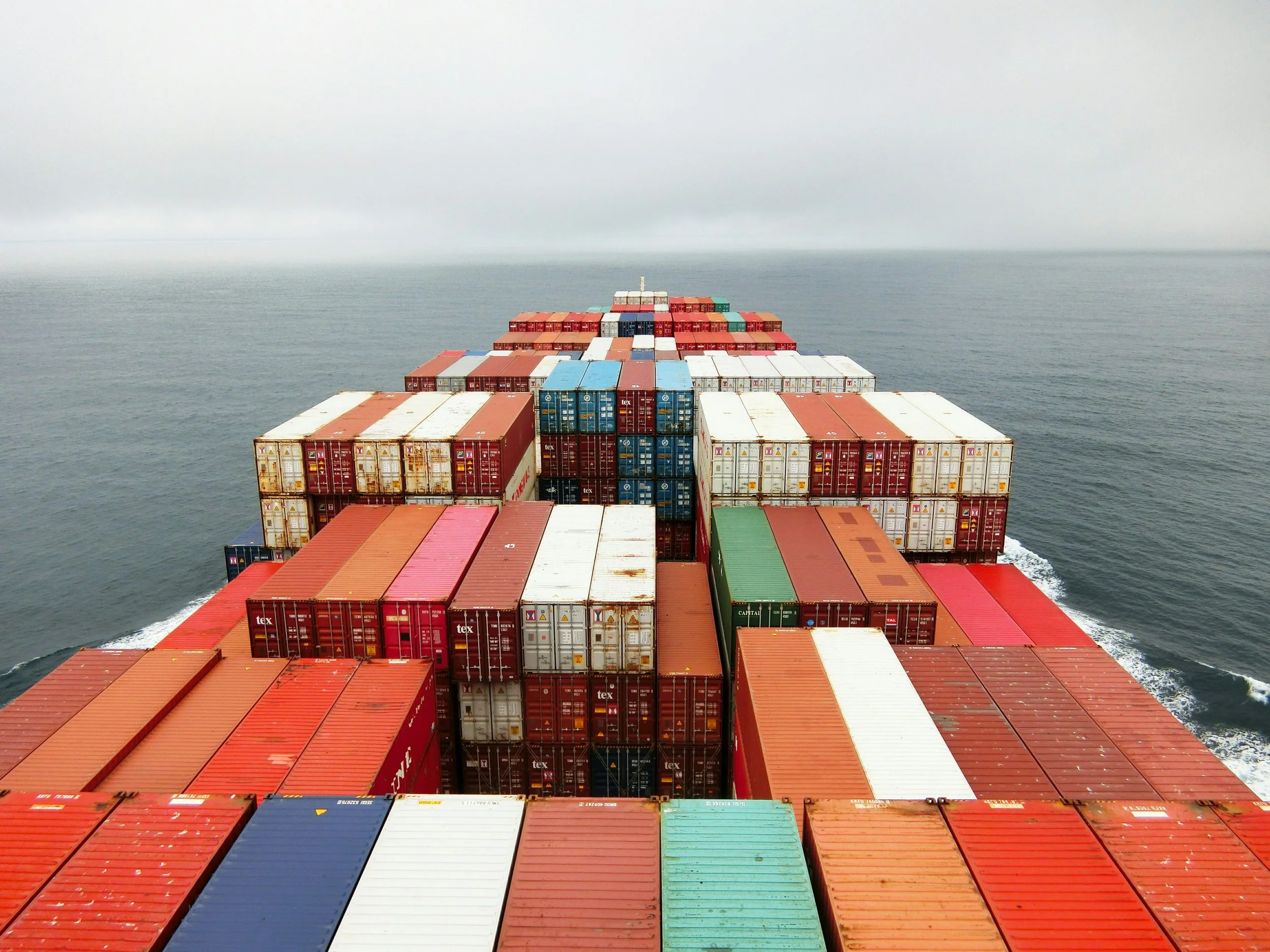
What separates the businesses handling this well
The exporters weathering this smoothly generally aren't the ones with the best guess at where tariffs go next, nobody has that. They're the ones who built tariff exposure as a live variable in their planning model months ago, so that when the number moves, the forecast moves with it in minutes, not days.
That's the practical difference platforms like Workday Adaptive Planning and OneStream are built to make….
Instead of a static spreadsheet, you get a driver-based model where a tariff rate, an FX rate, or a freight cost is a single input: change it once, and every downstream number (margin by product line, cash position, board pack) updates automatically.
Scenario planning becomes the default way of working: "what does a 12.5% tariff do to Q3 margin, versus 10%, versus 15%" is a five-minute exercise, not a five-day one.
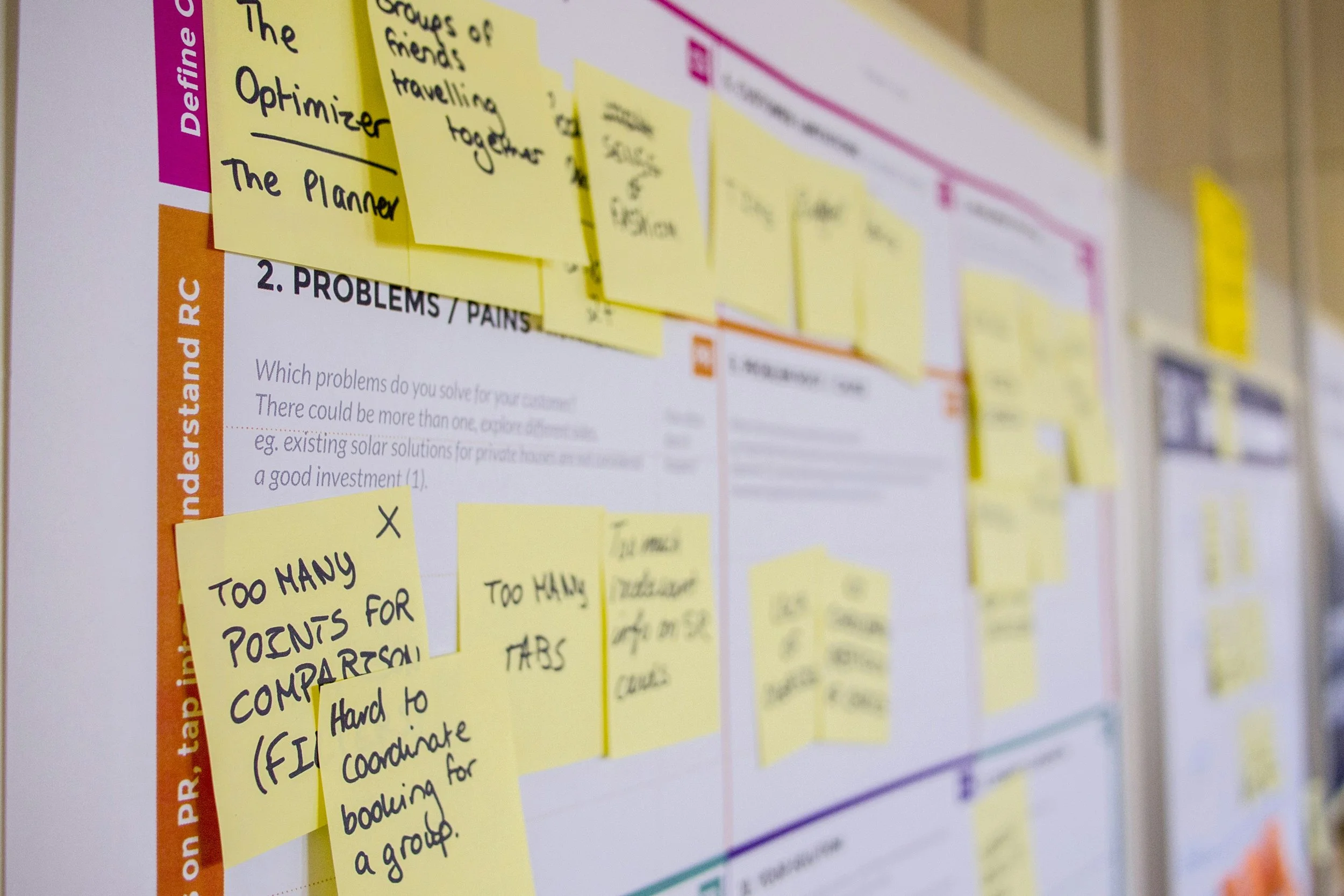
What businesses could have already had visibility on
The 12.5% rate didn't come out of nowhere. The Section 301 investigation into forced-labour enforcement had been running since March 2026, the USTR proposed the 12.5% rate for Australia specifically on 3 June 2026, and the 10% Section 122 tariff it replaced had a known 150-day expiry of 24 July 2026 from the day it started. A business with the right planning setup didn't need to wait for 2:01pm AEST today to see this coming, it could have been running the scenario since early June at the latest.
That's the real value of a driver-based model: it's not just for reacting after a rate changes, it's for holding several futures open at once while the current rate is still in place. T
hrough June and July, while the 10% Section 122 levy was still live, a CFO and FP&A manager with tariff built in as a variable could have already had, side by side:
Best case: the USTR's proposed 12.5% rate is negotiated down or dropped, given Australia's formal submission arguing its forced-labour laws are already among the strongest in the world
Base case: the 12.5% rate goes ahead as proposed on 3 June, taking effect when the 10% Section 122 tariff lapses on 24 July
Downside case: a sharper rate, or a further legal shift entirely, echoing the pattern already seen twice since April 2025 (IEEPA struck down, replaced under Section 122, now layered with Section 301)
Each of those scenarios would already show its own margin impact, cash position, and P&L by product line and market, ready to go ahead of the news, not something to build from scratch once the news broke.
So when the 12.5% rate landed today, it wouldn't have been a fire drill. It would have been a case of opening the scenario that was already sitting there, checking it was still the right one, and briefing the board off numbers that had been live for weeks rather than numbers built overnight.
This is the real difference a planning platform makes: not being faster at reacting, but not needing to react at all, because the range of plausible futures was already modelled, current, and one click from the base case.

There’s a lot to consider: what a model would need to account for
The Australian Financial Review's coverage adds detail worth building into any model, because the impact is far from uniform across a typical export book:
It's not universal. About 70% of Australia's exports to the US stay duty-free under the new regime, including five of the country's top ten exports: gold, beef, pharmaceuticals, copper and coins. Cochlear has already told the ASX its products remain tariff-free too. This is a line-item problem, not a blanket one, which is exactly the kind of detail a driver-based model handles well and a single "apply 12.5% to revenue" spreadsheet formula gets wrong.
There's a real cost estimate attached. Prior modelling by EY Oceania put the annual cost of a 12.5% tariff to Australia's US-bound exports at $1.6 billion, a figure worth stress-testing against your own exposure rather than assuming it applies evenly.
The last regime was actually a windfall. The AFR reports exports to the US surged more than 20% under the prior tariff settings, as higher tariffs on competing suppliers pushed US buyers toward Australian goods, with beef exporters among the biggest beneficiaries. It's a useful reminder that "tariff" doesn't always mean "headwind" for every exporter, and a scenario model should be built to show upside cases too, not just downside ones.
Canberra is still pushing back. Trade Minister Don Farrell said the tariffs were "unjustified" and inconsistent with the free trade agreement, and Deputy Prime Minister Richard Marles said the new levies "make no sense" given Australia's existing modern slavery framework. Neither objection has changed the outcome so far, which is itself worth building into a downside scenario: government representation hasn't reversed a rate change yet in this cycle.
The bigger lesson for CFOs
Trade policy uncertainty isn't going away, this has been a live issue since the original tariff took effect in April 2025 and shows no sign of settling into something predictable. The businesses that will handle the next change well are the ones treating this as a systems question now, not a one-off crisis to firefight each time.
If your team's honest answer to "how long would it take us to reforecast for a tariff change tomorrow" is measured in days or weeks rather than minutes or hours, that's less a comment on the team and more a comment on the tools they're working with.
Tools like Workday Adaptive Planning and OneStream not only transform how teams work with a single source of truth, removing key person risk, being able to model hundreds of scenarios in moments to determine the best way forward - they mean having the answers ready, trusted, and at your fingertips. They can also help with retaining your team - teams with less fire-drills and more strategic moves are often higher functioning and happier.
Were you ready for this change?

About Data Hive Consulting
Data Hive Consulting advises on, implements, and supports Corporate and Enterprise Performance Management (CPM/EPM) platforms, including Workday Adaptive Planning & OneStream, for organisations across Australia and beyond. With 25+ years of real corporate finance and FP&A experience behind every implementation, the team closes the gap between disconnected spreadsheets and a single, driver-based planning environment.
Interested in what a platform-based, data-connected, governed driver-based planning model would look like for your business?
Get in touch to talk through what's actually changing in your forecasting process, not just the feature list.
Author: Leah Diprose - Commercial Director, Clients & Growth - Data Hive Consulting
