
By Leah Diprose, Commercial Director | Data Hive Consulting · 30 Oct 2026
Executive summary
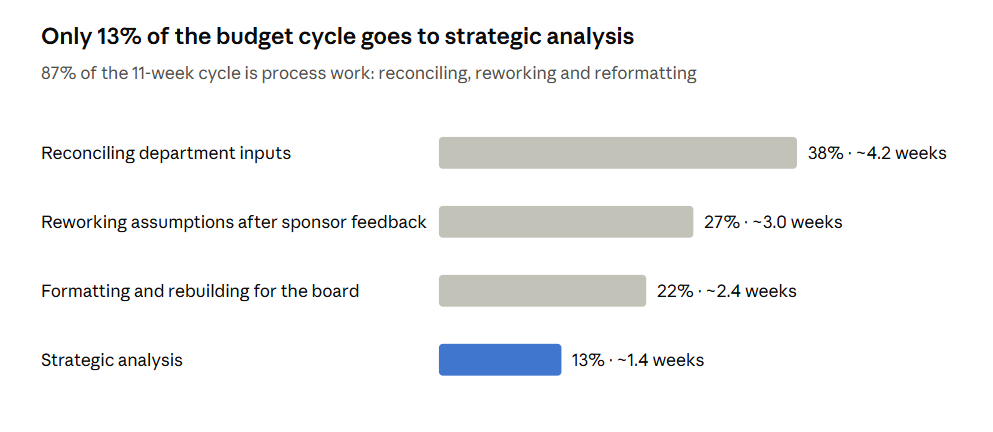
The problem: 84% of CFOs at $50 million-plus private equity (PE)-backed companies still build the budget in Excel. It takes 11 weeks on average, only 13% of that time goes to strategic analysis, and 67% of budgets go through five or more full revisions (Accordion / Wakefield Research, September 2026).
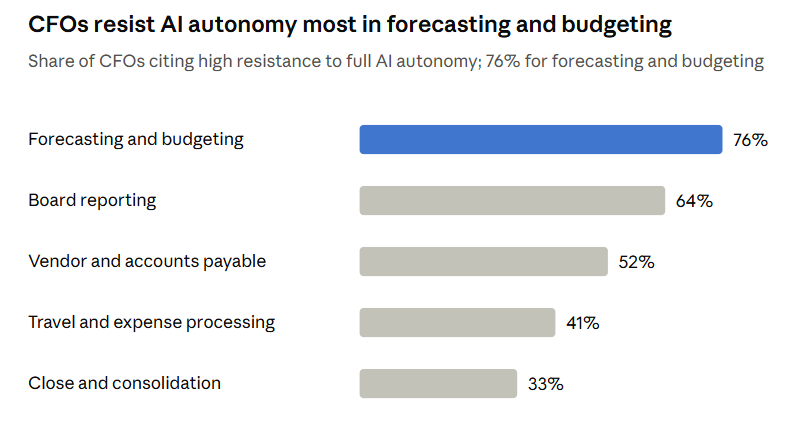
The disconnect: operating partners rank budgeting as their top artificial intelligence (AI) opportunity, and 44% of buyers already ask about AI-enabled budgeting in diligence. CFOs resist most, because budgeting depends on their judgment.
The trap: adding an AI assistant like Claude to a spreadsheet makes files faster to build, but not trustworthy. There's still no audit trail, version control or permissions, and sensitive data can leave the business.
The answer: a governed enterprise performance management (EPM) platform such as Adaptive from Workday or OneStream automates the process work, keeps judgment with the CFO, and embeds secure AI on auditable, traceable numbers, with Excel still available as the interface.
The result: initial value in 4 to 12 weeks, no change to your enterprise resource planning (ERP) system, and month-end close cut from day 19 to day 4 for one Data Hive Consulting client.
Contents
The real cost of the spreadsheet budget
AI on a spreadsheet is not transformation
Why a spreadsheet plus Claude isn't the answer
AI built in: Adaptive Decision Intelligence and OneStream SensibleAI
Why this matters beyond finance
What an EPM platform changes
The results are real
The bottom line
Frequently asked questions
Explore EPM solutions to get out of spreadsheets
84% of chief financial officers (CFOs) at private equity (PE)-backed companies still build their core budget in Excel.
That's the headline from Accordion's PE-Backed Budgeting Benchmark, a survey run with Wakefield Research in September 2026 of:
100 private equity operating partners, and
100 CFOs at PE-backed companies with $50 million or more in annual revenue
The disconnect is striking:
74% of operating partners named budgeting as the biggest artificial intelligence (AI) opportunity in finance.
44% of buyers are already asking about AI-enabled budgeting in diligence. The question they'll ask next is whether the numbers are governed, auditable and traceable, and a spreadsheet with an AI assistant can't answer that.
Yet CFOs named budgeting the area they're least willing to automate, because it depends on their judgment. The answer isn't handing judgment to AI. It's automating the process work around it.
Accordion's report paints a clear picture. Each year, PE-backed CFOs spend close to three months building next year's budget, revising the model five or more times before the board sees it, and still doing most of it by hand in Excel:
“PE-backed CFOs give up almost three months to build next year’s budget, watching the model get revised five or more times before a board ever sees it…. On top of that, the budget itself is still built in Excel, with little automation. The result is a process that’s long, manual, and increasingly out of step with the rest of the organization. AI is already being embedded across the finance function. Budgeting isn’t where it’s landed yet, even though Operating Partners have ranked it as their top AI priority, ahead of anything else in finance.”
This matches what we see often at Data Hive Consulting: scale-up CFOs and finance leaders are often the most attached to spreadsheets of anyone. They tell us "everything is working fine" in spreadsheets, or that they're now automating with Claude and Excel or Google Sheets. That’s not something a board, investors or auditors can rely on. It also builds technical debt and burns time that could have gone into implementing a best-in-class, governed, auditable, AI-enabled EPM solution: one that accelerates the close and drives enterprise value at exit, through trusted numbers and minimal manual intervention in reports and forecasts.
The real cost of the spreadsheet budget
11 weeks on average from kickoff to board-ready, stretching to 14 weeks after an add-on acquisition
98% of CFOs say budgeting competes directly with fourth-quarter (Q4) execution: closing out the year, hitting EBITDA (earnings before interest, taxes, depreciation and amortisation) targets and preparing the board story
67% of models go through five or more full revisions before they're final
Accordion’s PE backed CFO and LP survey 2026 https://www.accordion.com/pe-backed-budgeting-benchmark-ai/
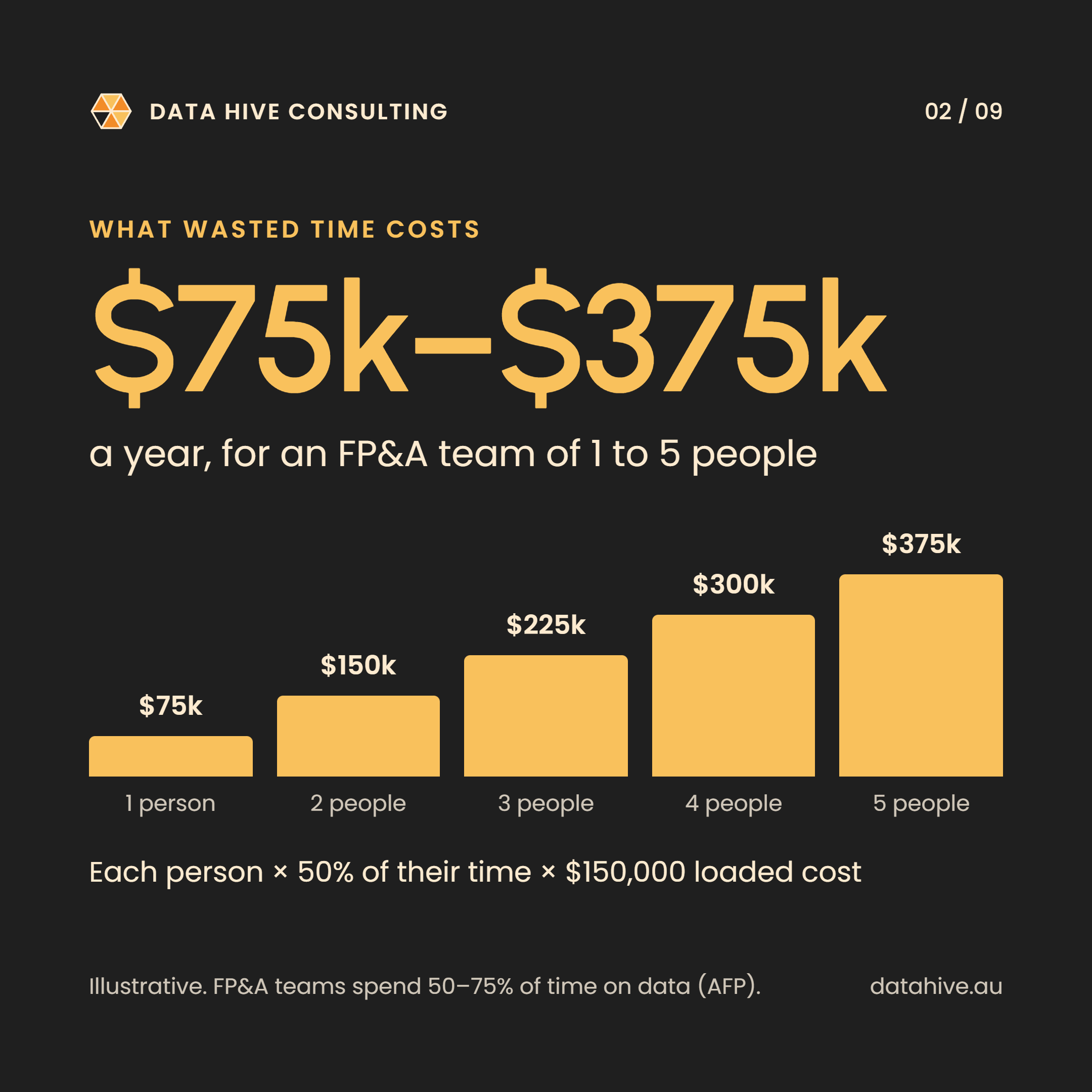
Almost none of that time is spent on judgment. It goes to chasing numbers, redoing the model and reformatting it for the board.
Accordion’s PE backed CFO and LP survey 2026 https://www.accordion.com/pe-backed-budgeting-benchmark-ai/
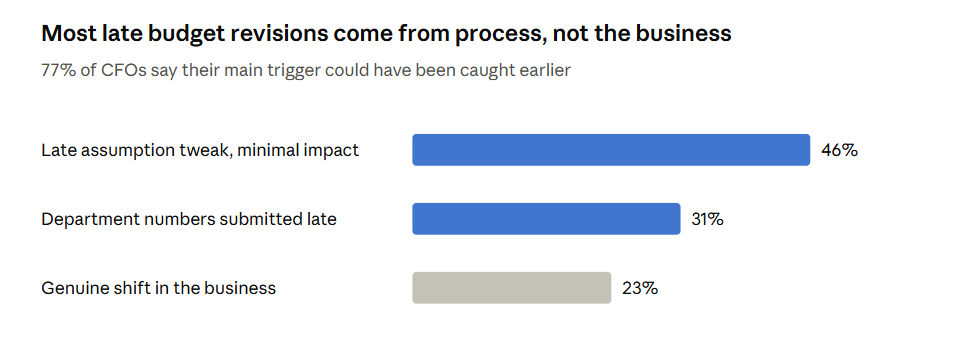
Only a minority of late revisions reflect real change in the business. The rest are exactly what a governed, driver-based model is built to support rapidly: assumptions that flow through instantly, and department inputs submitted straight into the model on a deadline.
AI on a spreadsheet is not transformation
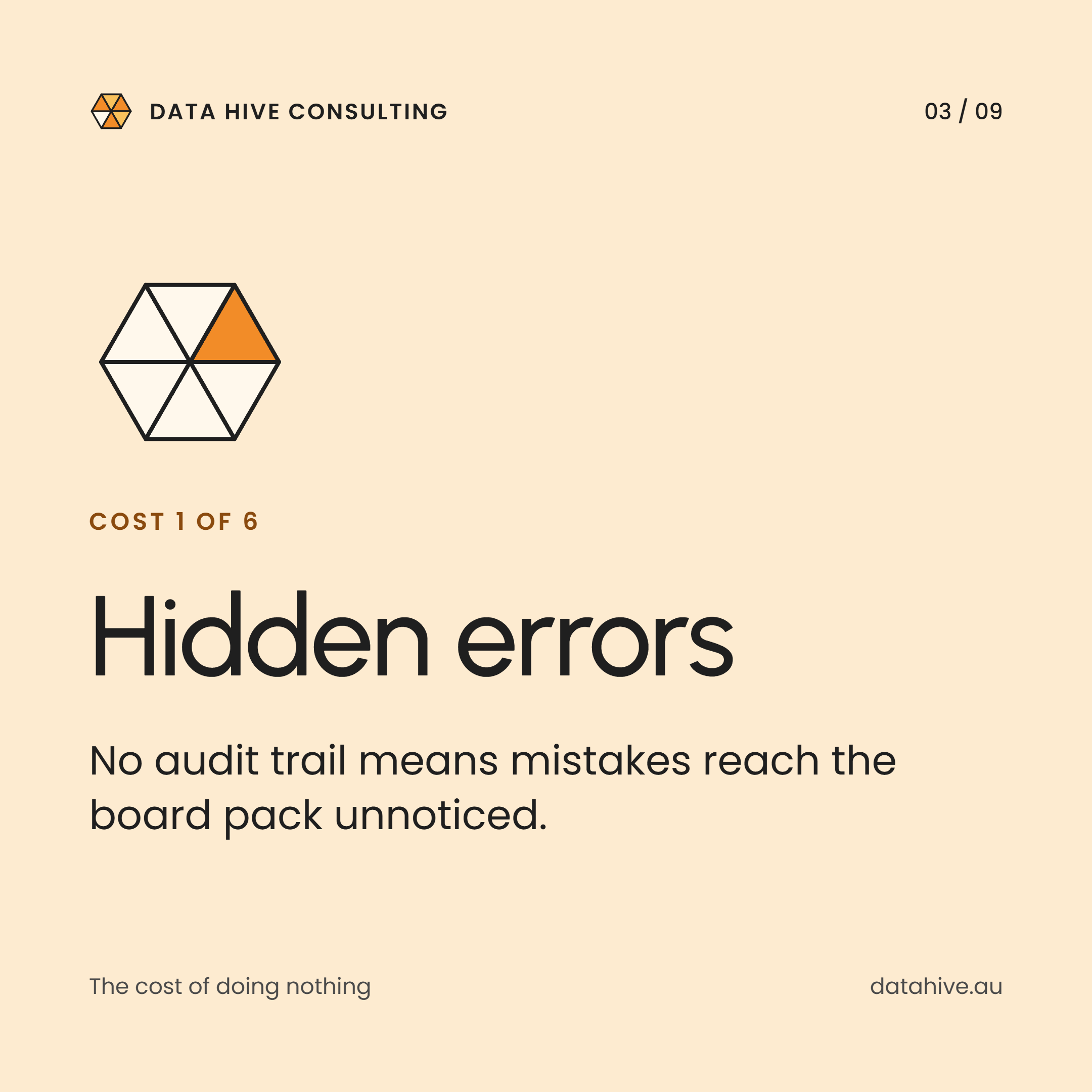
Here's the trap we see a lot right now: bolting AI onto spreadsheets and calling it transformation. It might make the files faster to build. It doesn't make the numbers trustworthy. You still can't trace where a figure came from, who changed it, or which version the board actually saw.
Staying in spreadsheets, with or without AI, is not the same as moving to an enterprise performance management (EPM) platform.
A spreadsheet plus Claude isn't the answer
AI assistants like Claude are genuinely impressive at analysing a model, explaining variances or drafting commentary. But pairing one with a spreadsheet doesn't make the spreadsheet enterprise-ready. It still lacks the governance, auditability and system-of-record architecture a growing business needs. The same is true of any general-purpose AI assistant.
1. The data is still fragile
Static snapshots: the AI reads the file as it stood at one moment. When the business moves, someone has to re-import the data and re-prompt (Quadratic).
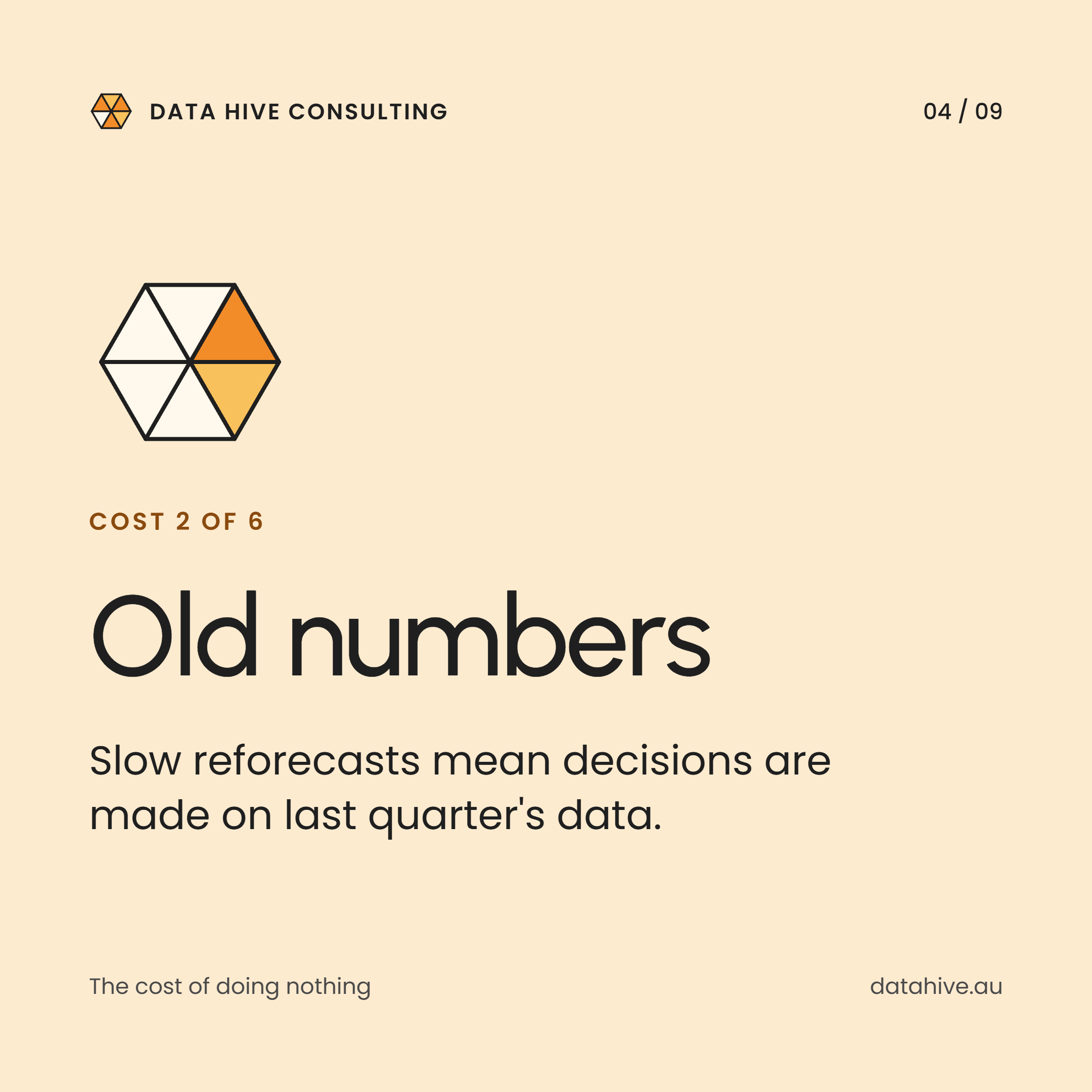
Version chaos: fast AI-assisted iteration spins out more files, not fewer: v2, final_v4, model_revised. That's the opposite of a single source of truth (Quadratic).
Probabilistic, not deterministic: budgets rely on exact formula logic. A language model can misread cell dependencies or produce a plausible formula that fails silently on an edge case (Yann Kronberg).
2. Governance and audit gaps
No audit trail on the numbers: the spreadsheet still can't show who changed an assumption, when, or which version the board approved.
More data leaves than you think: uploading a workbook to an AI tool sends the whole file, including hidden sheets, pivot caches and comments. A budget model with a hidden payroll or acquisition tab goes with it (Jazz).
Shadow AI is the norm: Verizon's 2026 Data Breach Investigations Report (DBIR) found 67% of AI users on corporate devices sign in with non-corporate accounts (Verizon DBIR 2026).
Add-ins sit outside your controls: Anthropic's own documentation says Claude for Excel doesn't inherit custom data retention settings and its activity isn't included in Enterprise audit logs (Anthropic).
Unreleased results are still material non-public information (MNPI): if a forecast goes into a personal AI account, the company can't say who can see it or get it deleted (Jazz).
New security risks: hidden text in imported data can steer spreadsheet AI into inserting formulas that send cell data to an outside server, a form of indirect prompt injection (Jazz, Stacklok).
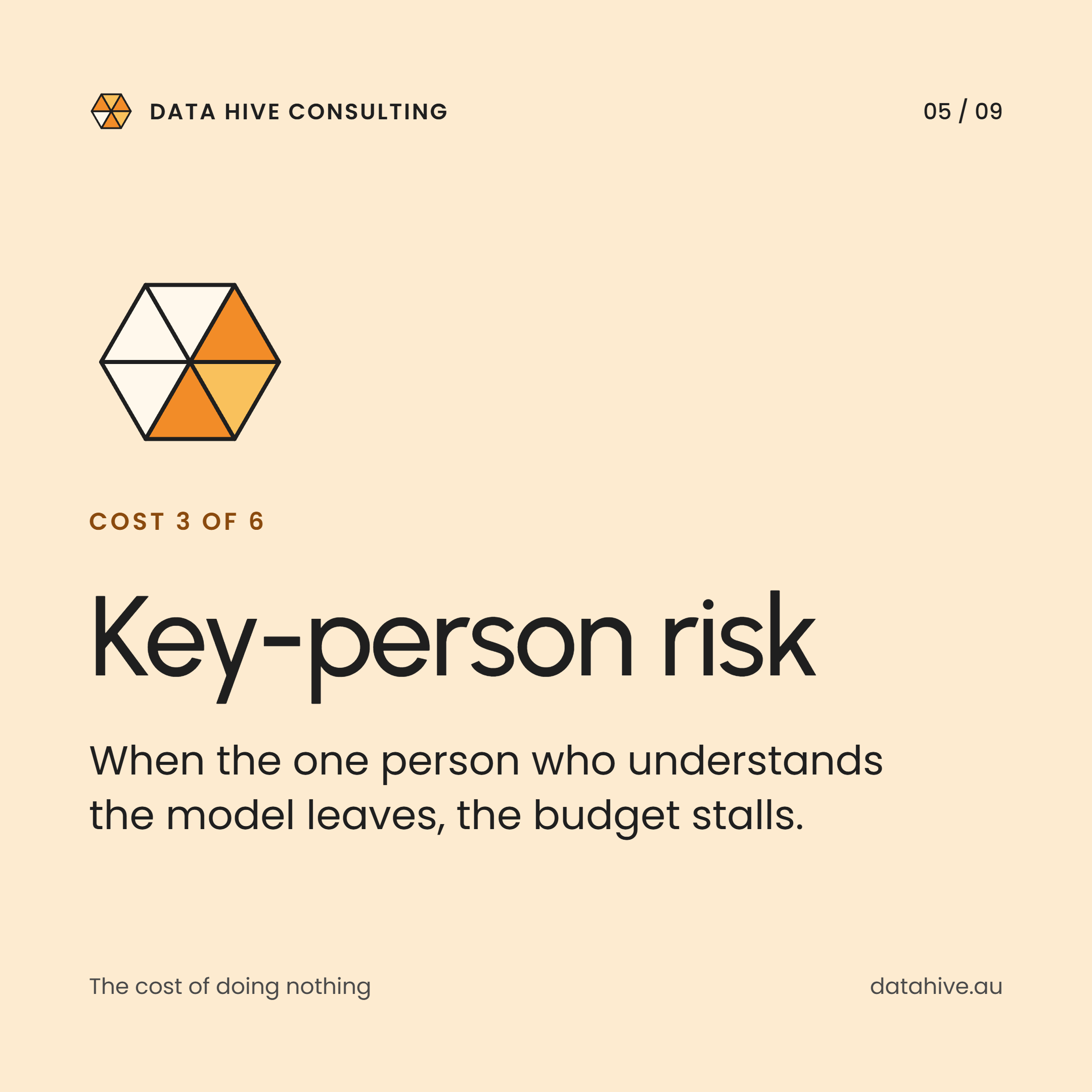
3. AI is the analyst, not the system of record
The right model is AI working on top of governed data, not instead of it. An EPM platform holds the permissioned, traceable numbers; AI then helps people analyse and explain them. Put AI on a spreadsheet and you get faster answers from data nobody can fully trust.
AI built in: Adaptive Decision Intelligence and OneStream SensibleAI
The good news for CFOs who want AI without giving up control: both leading EPM platforms now embed AI directly in the governed planning model. Answers respect user permissions, every change is tracked, and the numbers trace back to source.
Adaptive from Workday: Decision Intelligence
Decision Intelligence lets planners ask questions in plain language, investigate variances and model options, then commit decisions straight back to the plan, all within the governed model and only on data they're permitted to see. Adaptive also includes AI for building models, predictive forecasting and anomaly detection, plus a secure connection for assistants like Claude and ChatGPT. Workday reports TX Group built its fiscal year 2027 (FY27) cash-flow forecast in 10 minutes using Decision Intelligence.
OneStream: SensibleAI
SensibleAI brings machine learning forecasting and pre-built AI agents for reporting and analysis into the OneStream platform, including in Excel and Teams, and extends the same governed access to Copilot, Claude, ChatGPT and Gemini. OneStream reports average forecast accuracy gains of more than 25% across customers, and Australia's Endeavour Energy cut its forecast error from 6% to 2%, which it says saved $40 million.
What about security?
This is where the gap with a spreadsheet-plus-AI setup is widest. With an EPM platform, the AI runs inside the same security boundary as the financial data, rather than someone uploading a workbook to a separate tool.
Adaptive from Workday
Adaptive is covered by Workday's independent System and Organization Controls (SOC) audits and ISO security and privacy certifications, and Workday's AI program is certified to ISO/IEC 42001 for AI management. AI answers follow the same permissions as the planning model.
OneStream
OneStream is ISO 27001 certified with regular SOC audits, and holds US Federal Risk and Authorization Management Program (FedRAMP) High authorization, which now covers its SensibleAI tools. OneStream says it doesn't train its models on customer data, and its AI runs on the governed data without exporting it to separate tools.
OneStream SensibleAI security FAQ
Compare that with the spreadsheet route: a workbook uploaded to an AI tool takes hidden sheets with it, may land in a personal account outside company control, and leaves no audit trail inside the business. Your IT and risk teams should still review each vendor's documentation against your own requirements, but the starting point is very different.
The point: keep the AI, change what it works on
Your team doesn't have to give up Claude or ChatGPT. Both platforms let those assistants connect to the governed model directly, instead of reading a spreadsheet someone uploaded. Same AI, but working on permissioned, auditable numbers with a full record of who did what.
Vendor-reported results. AI feature availability depends on your licence; we can help you confirm what's included.
Why this matters beyond finance
Boards and directors: can you trace any number in your board pack back to its source? If the answer is "someone would need to check the file," that's a governance gap.
Chief executive officers (CEOs): your finance team is spending most of its time stitching files together, not helping you run the business.
PE sponsors and investors: in Accordion's survey, 65% of sponsors are confident AI-enabled budgeting expands exit multiples, and 44% of buyers are already asking about it in diligence. A modern, governed planning process is becoming part of what a business is worth.
CFOs: speed matters, but control matters more as you scale.
Accordian’s PE backed CFO and LP survey 2026 https://www.accordion.com/pe-backed-budgeting-benchmark-ai/
What an EPM platform changes
That's the case for platforms like Workday Adaptive Planning and OneStream.
Governance and trust
Governed: one source of truth, with permissions controlling who can see and change what
Auditable: a full record of who did what, and when
Traceable: drill back through every number to its source
Excel without the risk: pull data into a spreadsheet and every number stays linked to the platform, so you can still drill back. A familiar interface with fully governed data
Speed and efficiency
Driver-based models where one assumption change flows through instantly
Department heads submit straight into the model, with no reconciliation chase
Board-ready reporting in one click, from the same data, not rebuilt each cycle
A faster close: automated consolidation and reconciliation take days out of month-end
Built for growth
System-agnostic: they sit on top of whatever enterprise resource planning (ERP) and other source systems you already run
Acquisition-ready: new businesses plug straight in, with no need to migrate them onto your ERP first
Fast to value: up and delivering initial value in 4 to 12 weeks, often less time than one budget cycle takes today
The results are real
This isn't theoretical. At Data Hive Consulting, we've taken one business's month-end close from day 19 to day 4, and another from day 8 to day 3 with EPM solutions. In Australia, the spreadsheets for close, consolidation, budgeting, reporting, and planning are not only in PE-backed organisations, but so many organisations including family-owned businesses, and ASX-listed organisations. All can benefit from and see fast return on investment with EPM solutions such as Adaptive from Workday or OneStream.
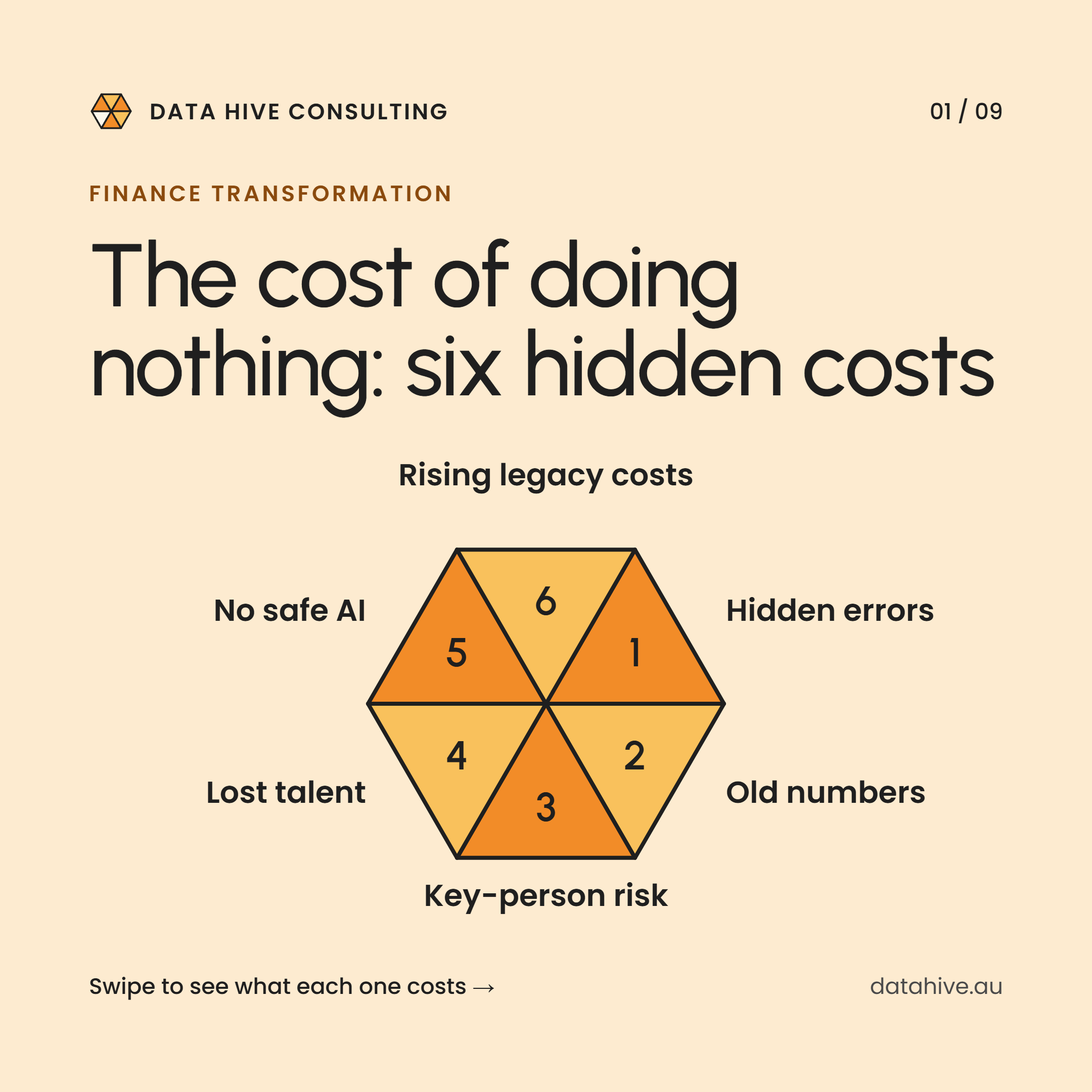
The cost of doing nothing is real
Scale-ups don't outgrow spreadsheets because Excel is bad. They outgrow them because a growing business, and really any business, needs numbers at pace that it can trust, trace, and defend.
So here's the question worth asking at your next board meeting: can we drill back through every number we're seeing directly from the report or will it take a day or a week to explain a number? If it’s the latter, you’ll likely benefit from implementing an EPM solution.
Let’s talk.
Still in spreadsheets?
Change is lower cost and delivers much higher value than staying in manual processes that delay insights and introduce risk, and increased costs to the business. Let’s chat!
Frequently asked questions
What is EPM, and how is it different from ERP?
Enterprise performance management (EPM) software handles planning, budgeting, forecasting, consolidation and reporting. Your ERP records transactions; EPM turns that data, plus operational data, into plans, forecasts and board reporting.
Do we need to replace our ERP to implement EPM?
No. EPM platforms sit on top of the ERPs and source systems you already run. That's also why acquired businesses can be brought into planning and reporting without first migrating them onto your ERP.
Can our team still use Excel?
Yes. Both Adaptive and OneStream let people work in Excel, but the numbers stay linked to the platform. Anyone can drill back to the source, and permissions and audit trails still apply.
How long does implementation take?
With a phased approach, most organisations see initial value in 4 to 12 weeks, typically starting with the budget or the month-end close. Broader rollouts across workforce, sales or operational planning follow from there. Timelines depend on scope, data quality and the number of source systems.
What does an implementation involve?
Typically: design workshops to agree the model and reporting, connecting source systems, building and testing the model, loading history, training users and running a parallel cycle before go-live.
Who needs to be involved?
A finance lead who owns the model, someone from IT for system connections, and the department heads who will submit numbers. Executive sponsorship from the CFO matters most.
How do we know we've outgrown spreadsheets?
Common signs: the budget takes more than a few weeks, reconciling department inputs takes most of the cycle, nobody is sure which version is final, board packs are rebuilt by hand, or an acquisition makes consolidation painful.
Is AI included?
Yes. Both platforms build AI into planning and reporting, working on governed data rather than disconnected files. That means faster forecasting and variance analysis without losing auditability or trust in the number, or putting your data at risk.
Adaptive or OneStream: which is right for us?
Adaptive is strong for fast, flexible financial, workforce and operational planning. OneStream unifies financial close, consolidation, planning and reporting in one platform, which suits complex, multi-entity or acquisitive groups. The right choice depends on your priorities, and we can help you assess both.
Explore EPM solutions to get out of spreadsheets
Adaptive from Workday
Formerly Workday Adaptive Planning.
Adaptive overview: the unified planning platform
Financial Planning: budgeting, forecasting and reporting
Workforce Planning: headcount and people-cost planning
Operational Planning: plans modelled at the level teams work
AI for FP&A: AI built into the planning model
OneStream
OneStream platform: one platform for close, planning and reporting
AI Financial Planning: forecasting, scenario modelling and driver-based planning
Financial Close & Consolidation: consolidations, reconciliations and journal management
Integrated Business Planning: financial, sales, workforce and operational planning aligned
AI and Agentic Finance: governed AI agents for finance
Not sure which one fits your needs best?
Not sure which platform fits? Data Hive Consulting implements both and can help you assess where to start.
About Data Hive Consulting
Data Hive Consulting helps organisations transform financial reporting, budgeting, forecasting, consolidation and performance management through modern EPM solutions, including Adaptive from Workday and OneStream. We work with finance leaders across Australia and New Zealand to simplify processes, connect data, reduce spreadsheet dependency and improve decision-making.
Interested in what a platform-based, data-connected, governed driver-based planning model would look like for your business? Already have a platform which you would like reviewed, improved, or extended?
Get in touch to talk the art of the possible for your reporting, planning, and insight generation with EPM.
If you would like to get on the list for future events and updates, or want to speak about how Adaptive could work in your organisation, get in touch with our team.
Author: Leah Diprose - Commercial Director, Clients & Growth - Data Hive Consulting
